Of all the consultations that reach us, one obstacle comes up more than any other: electrical capacity. Many older Surabaya houses still run on a 2,200–5,500 VA subscription, while a conventional sauna heater asks for 7,700–11,000 VA. Raising supply is not always possible — a tenant has no right to change the subscription, some apartment buildings cap the load per unit, and some owners simply do not want a permanent increase to their monthly bill.
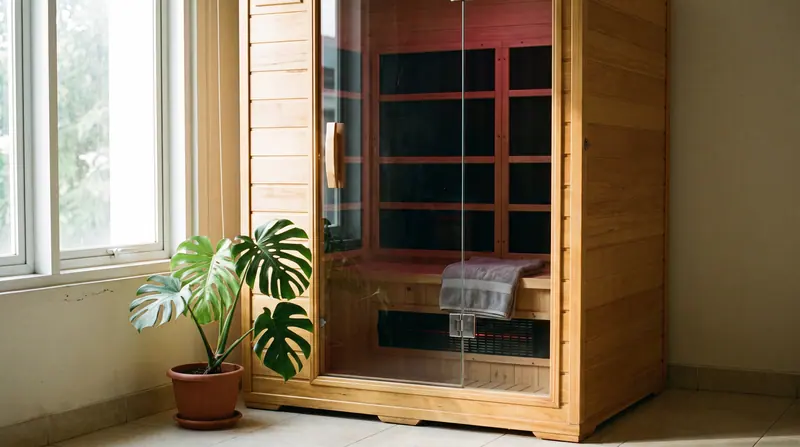
An infrared cabin removes that problem at the root. It draws only 1.7–2.4 kW — about what a couple of kitchen appliances use running together — so the existing subscription is usually more than enough. There is no PLN queue to join and no large-scale rewiring of the household panel.
The bonus is speed. Because the cabin arrives as factory-built modular panels, it goes in within one to two working days. The unit lands in the morning, and by that evening or the next day you are sweating inside it.
How does an infrared sauna actually heat the body?
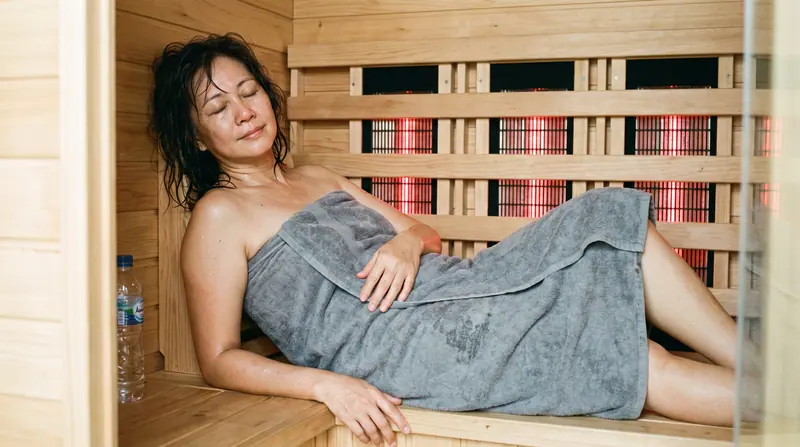
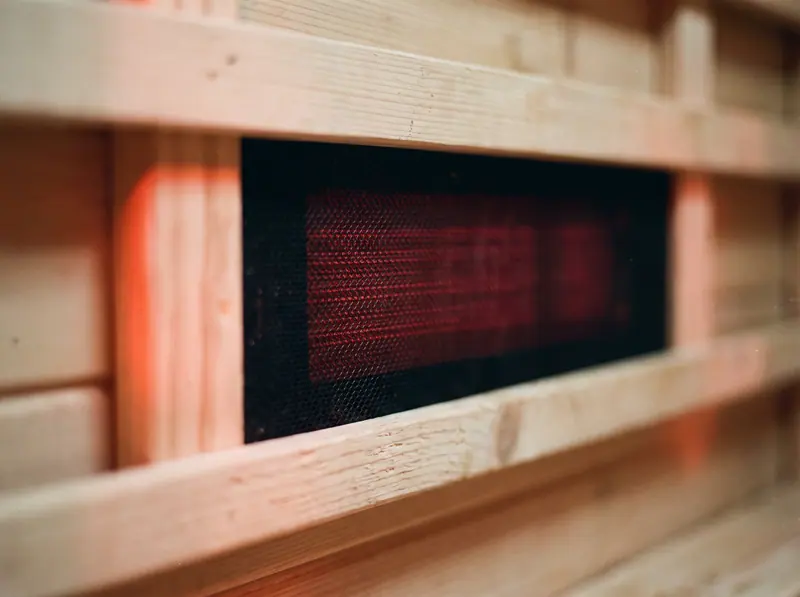
Carbon panels lining the cabin walls emit infrared waves that the body absorbs directly, rather than heating the air first the way a stone heater does. That is why room temperature only needs to reach 45–60°C: it feels gently warm, yet sweat still runs freely because the heat works from the skin inward. For anyone who finds 80°C stifling, an infrared session is far more approachable, and sessions can run longer without any scorching sensation. Warm-up is quick, too — the cabin is ready to use within minutes of switching on, with no stones to wait on. Because the panels sit close to the body rather than heating the whole air volume, a well-placed cabin also loses less heat when the door opens briefly, which matters in a small room where air conditioning is running nearby.
Who chooses an infrared cabin
The clearest fit is a renter or an apartment owner who cannot change the building’s electrical subscription at all, but plenty of homeowners choose infrared on its own merits too: a household that wants a fast result without a construction project, an older client who finds a dry sauna’s heat too intense but still wants a proper sweat, or anyone fitting a heat room into a home office or a small condo where a full cabin will not physically fit. We also see it chosen as a second unit — a family that already owns a dry sauna downstairs adds a small infrared cabin upstairs so two people can use different heat styles on the same evening without waiting on each other.
Cabin finish and what comes standard
Interior panelling is typically hemlock or a light spruce, chosen for a clean, pale finish that suits a bedroom or home-office setting better than a heavier, darker timber. Benching follows the same low-resin, low-heat-retention logic we use across every sauna format. Standard fittings include a digital control panel, interior lighting, and in most units a small audio connection; a backrest and a fold-down bench are common additions for a two-person cabin used mostly by one person at a time. Panels are rated for continuous use across a normal session length, and the whole cabin is function-tested before we consider the job finished, not just switched on and left running for five minutes. Where budget allows, an upgraded panel grade or a wider bench is a straightforward option to add at quote stage rather than a retrofit later.
Why does an infrared sauna suit limited power supply?
The arithmetic is simple. A 1.7–2.4 kW cabin leaves plenty of headroom even on a 3,500 VA subscription — the air conditioner and refrigerator keep running without tripping a shared breaker. What we do insist on is installation discipline: a dedicated cable run from the panel, its own breaker, and ELCB protection, never a shared general-purpose outlet. A cabin like this typically costs a fraction of what a 6–9 kW dry sauna heater draws to run each month.
How much does an infrared sauna cost in Surabaya?
| Type | Indicative price |
|---|---|
| Infrared cabin sized for one or two, installed | IDR 30–70 million |
| Conventional mini / prefab sauna, for comparison | IDR 15–35 million |
| Custom dry sauna 2×2 m, for comparison | IDR 60–120 million |
| Monthly running cost, infrared cabin | IDR 100,000–250,000 |
Prices above are indicative; a firm quote follows a free survey. The main variables: cabin capacity, panel type, interior wood grade, and extras such as lighting or an audio system.
Installed in 1–2 days, with no renovation
The process leaves almost no trace. Modular panels come in through a standard door, are assembled at the agreed spot, connected to the electrical run we prepare, and then run through a full function test. There is no wet trade, no wall demolition, no grinding dust drifting through the living room. If you move house later, the cabin can be dismantled and reassembled at the new address — an advantage a permanent sauna simply cannot offer.
Infrared or dry sauna: an honest choice
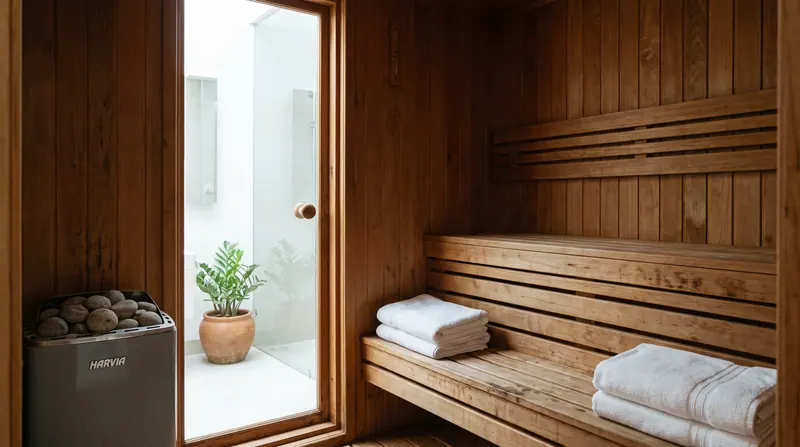
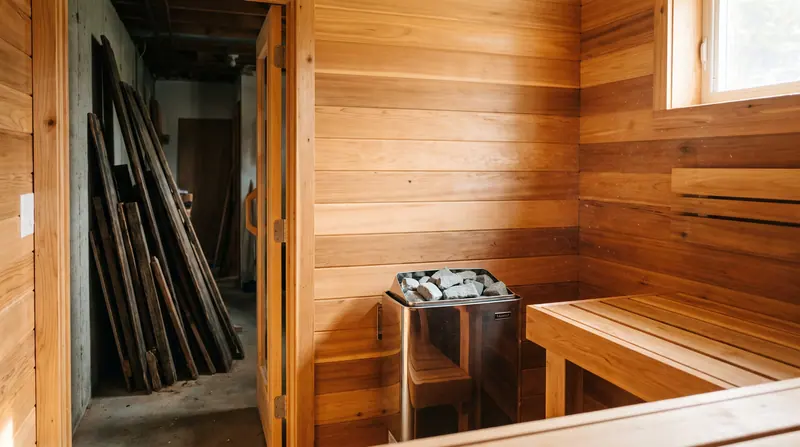
We sell both, so there is no reason to steer you toward one over the other. Choose infrared if power is limited, the room is small, you want a fast install, or you simply prefer a gentler heat. Choose a dry sauna if you are after the classic ritual — stones, a ladle, a short blast of steam that slaps you awake — and the house can carry the load; our home sauna builder page walks through that option along with full construction detail. Quite a few clients end up pairing an infrared cabin with a chiller-cooled cold plunge for hot-cold contrast on a modest electrical footprint. If you are weighing a DIY build against a professional install, our honest guide to building your own sauna explains where self-builds tend to go wrong.
From Dharmahusada to Rungkut: where we install
Most of our infrared cabins go into the Dharmahusada corridor — middle-class homes and premium boarding houses near the university campuses — followed by apartments around Gubeng where building management caps the electrical load per unit. Housing clusters in Rungkut come next, usually for a young family’s home gym. Our coverage runs across Greater Surabaya through to Sidoarjo and Gresik, with delivery and installation scheduled from the first conversation.
How ordering works
- Tell us what you need on WhatsApp — number of users and the room available.
- Our manager calls the same day with a model recommendation.
- Send photos of the room so we can check dimensions and the nearest power point.
- A free inspection visit follows if one is needed.
- You receive a visual of the cabin placed in the room.
- Final price and installation date are agreed.
- A 50% deposit locks in the unit and the schedule.
- The cabin is fitted within 1 to 2 days, tested with you present, and the 2-year warranty starts from handover.
A small electrical subscription is no reason to postpone a healthier routine. Send a WhatsApp message now — we will recommend the infrared sauna cabin in Surabaya that fits your room, your power supply, and your budget.