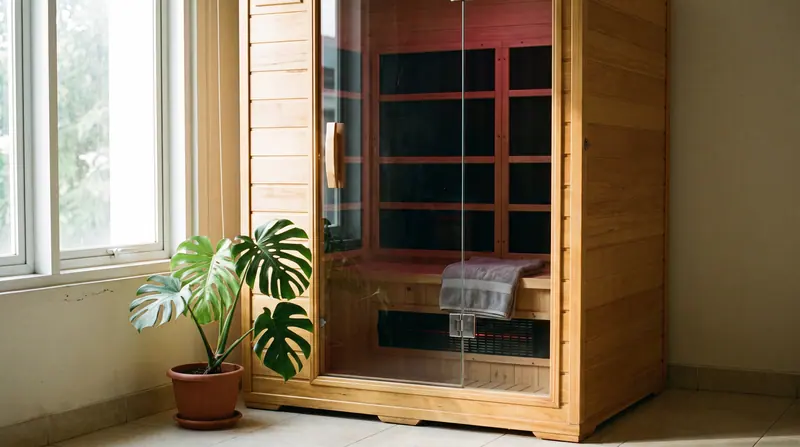
Infrared sauna
Carbon panels radiating 45–60°C straight into the body on just 1.7–2.4 kW — the answer for low-power units, standing within 1–2 days and involving no wet trades.
from IDR 30M
Coverage
Sauna construction in Dharmahusada is dominated by one format: infrared. Around Unair's campus and the hospital corridor, homes and home gyms tend to be mid-sized with a modest electrical supply, and an infrared cabin is usually the only format that fits both constraints without a power upgrade.
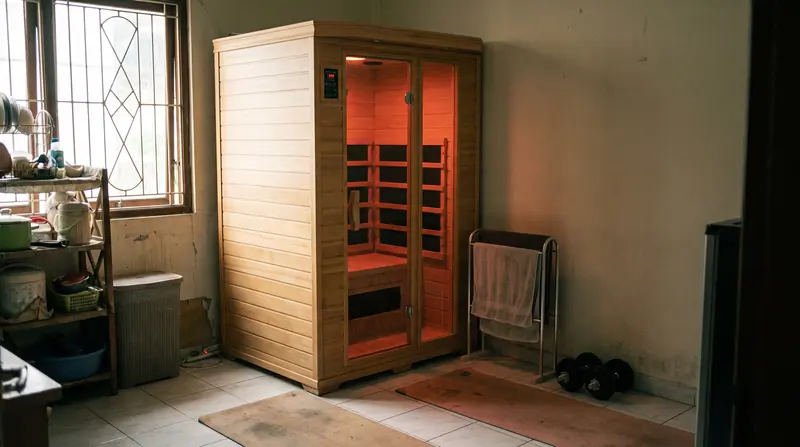
Services
Carbon panels radiating 45–60°C straight into the body on just 1.7–2.4 kW — the answer for low-power units, standing within 1–2 days and involving no wet trades.
from IDR 30M
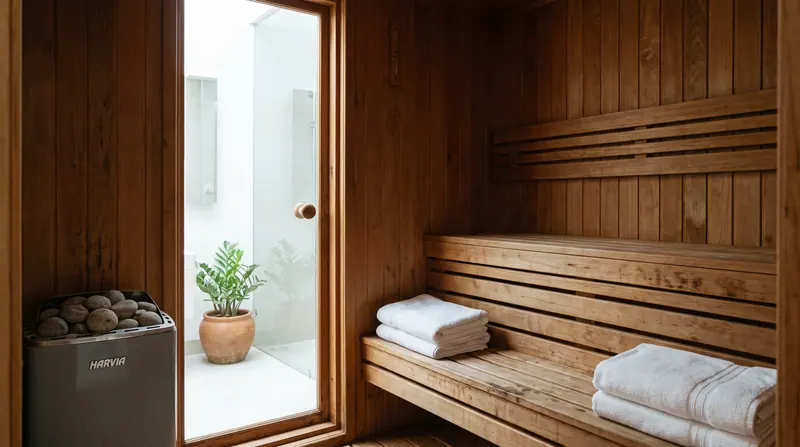
A daily heat ritual at your own house or apartment, delivered to the same standard as our commercial work: imported timber, wiring done right, and a full heat test before the keys change hands.
from IDR 60M
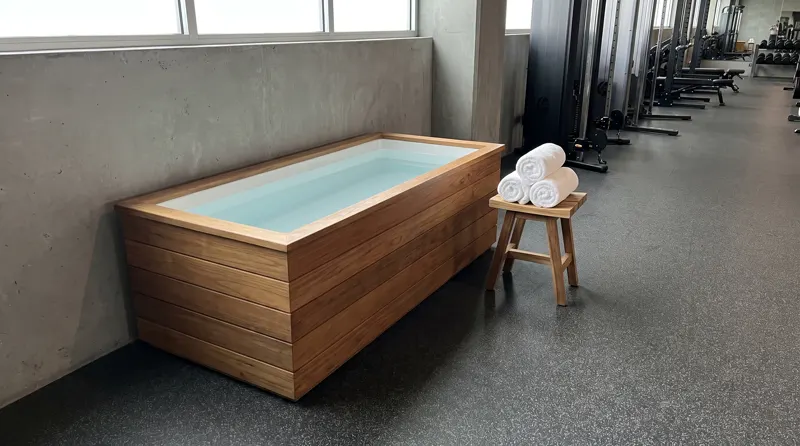
Chiller-cooled timber plunge tubs locking the water at 3–15°C — the sauna’s essential partner in a contrast circuit, from gym floors and padel clubs to a corner of a private home.
from IDR 45M
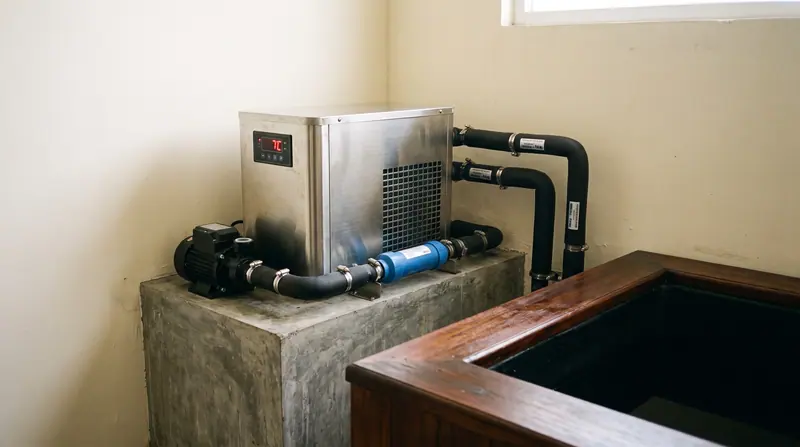
Cooling machines of 1/2–1 HP that keep the water cold even when the tub cycles users all day long — paired with filtration and sanitation so the water stays fit for many bathers.
from IDR 25M
Surabaya residents know Dharmahusada more as a campus-and-hospital corridor than a wealthy residential address — Universitas Airlangga’s Campus B, a referral hospital and a string of clinics sit shoulder to shoulder with mid-range family houses and student rental rooms. That resident profile shapes sauna demand here in a way that looks nothing like Surabaya’s wealthier districts.
Lecturers, medical staff, postgraduate students and young families living around Dharmahusada tend to share two constraints: a home that isn’t especially large, and a power supply that was never sized for a heavy appliance. This page covers why sauna construction Dharmahusada Surabaya work leans so heavily toward infrared and compact formats, the electrical detail that decides which option is realistic, and current indicative pricing.
Unlike a district that grew as a planned housing estate, Dharmahusada developed around the institutions beside it. Many houses here predate the campus and hospital’s expansion, with part of the floor space later rented out as a room or a small house share for students and medical staff. The result is a dense corridor of mid-sized buildings, not the large houses with generous gardens found on the city’s outskirts.
For us, that character means every recommendation has to respect the room actually available — not pitch a large cabin that looks good on paper but won’t fit the spare bedroom or small garage that’s the only option in a typical Dharmahusada home.
Some homeowners here also rent out part of their property as upscale rooms for postgraduate students or hospital staff. For an owner thinking like a property investor, adding an infrared cabin in a shared area can be the detail that sets a listing apart from an ordinary room near campus, without adding a heavy maintenance burden.
A small number of larger houses in this district still consider a wet-heat option; a steam room build here follows the same full waterproofing and drain-graded floor as anywhere else, though a steam room Dharmahusada request is far less common than infrared given the compact scale most properties work with.
Ordering patterns in Dharmahusada lean toward a single functional unit rather than the full wellness package more common in districts with bigger houses. For rented units, we also weigh installation practicality: an infrared cabin doesn’t require permanent wall demolition, so it can be relocated later if the unit changes use — unlike a custom dry sauna, which effectively becomes part of the building once installed.
Mid-range homes in Dharmahusada typically run on 2200–3500 VA, enough for daily household needs but tight once a 6–9 kW dry-sauna heater demanding 7700–11000 VA enters the picture. Raising PLN capacity remains possible, but for many families here the cost and paperwork make a format that avoids the upgrade entirely far more appealing.
That’s the core technical reason infrared is our default recommendation in this district: a 1.7–2.4 kW heater usually fits inside the existing household supply, so the project proceeds without the time-consuming PLN application process. Wiring still follows our full standard — heat-resistant SiHF cable with its own breaker and ELCB, separate from the rest of the household circuit — even though the total load is far lighter than a conventional dry sauna.
For the compact dry-sauna units some clients still choose, we apply the complete sandwich wall with rockwool, a foil layer and a 20 mm ventilation gap, because Surabaya’s tropical humidity around 80% doesn’t discriminate by cabin size — a small cabin is just as vulnerable to mould as a large one if the moisture barrier is incomplete.
For rental houses with several rooms on one meter, we calculate the combined load of every tenant before recommending a format, since even a small heater addition needs to avoid tripping the circuit during peak hours when every tenant is drawing power at once.
Many Dharmahusada residents keep a home training routine as a counterweight to a demanding study or work schedule. Pairing a compact infrared cabin with a small cold plunge creates a realistic recovery routine: an infrared session at 45–60°C for muscle relaxation, followed by a 3–15°C cold plunge for contrast, all inside a space no larger than a small bedroom.
For medical staff working long hospital shifts nearby, physical recovery is a real need rather than a lifestyle choice — which keeps demand for compact formats in Dharmahusada fairly steady year-round rather than seasonal, unlike districts closer to leisure destinations.
Irregular lecture and shift schedules also make installation timing flexible here: clients often ask for work to happen during the day while residents are on campus or on shift, rather than sticking to the weekends most household projects prefer elsewhere in the city.
| Project type | Indicative price |
|---|---|
| Infrared sauna, 1–2 people | IDR 30–70 million |
| Compact home sauna (two-person model, 1.5×1.2 m) | IDR 55–70 million |
| Prefab mini sauna with fitting included | IDR 15–35 million |
| Cold plunge with chiller | IDR 45–90 million |
| Chiller only (1/2 HP) | IDR 25–55 million |
These figures are indicative; we confirm the final quote after a free survey of your home or unit in Dharmahusada. For a fuller cost breakdown, see sauna cost Surabaya, and for the case for pairing sauna with cold-water immersion, contrast therapy benefits covers the recovery science in more depth.
To the west, Gubeng — where our team is based — also serves compact homes and apartments, with the added segment of small offices that Dharmahusada doesn’t have. To the south-east, Rungkut has an entirely different profile: the SIER industrial estate needs commercial saunas for staff facilities, not the compact residential units that define Dharmahusada.
Dharmahusada’s own character stays consistent as a campus-and-health corridor, which is why our recommendations here rarely change from one season to the next.
If you live around Dharmahusada and are weighing up a sauna for your home or home gym, send a WhatsApp message with the room size available — we’ll recommend the most realistic format before a survey is even scheduled.
FAQ
Homes and apartments around Dharmahusada's campus and hospital corridor are typically mid-sized with a limited power supply. An infrared sauna needs only 1.7–2.4 kW, well under the 6–9 kW a dry-sauna heater draws, so it fits without raising PLN capacity at all.
An infrared cabin usually installs in 1–2 working days, since it skips the full sandwich-wall construction a dry sauna needs. That makes it the fastest option for students, lecturers or medical staff who don't have time to oversee a longer build.
Yes, provided at least 1.5×1.2 m is free for a two-person model. This compact home sauna still runs a 3.6 kW heater needing only 5500 VA, realistic for a mid-range household supply in this district.
Many residents here run a personal home gym as part of a regular training routine. A cold plunge as the contrast-therapy partner speeds muscle recovery, and it can be sized to fit a bedroom corner or garage rather than a dedicated wellness room.
An infrared sauna for 1–2 people runs IDR 30–70 million, while a mini dry sauna starts at IDR 15–35 million. Every number here is a guide — the final quote arrives once the free survey is done of your home or unit.
A photo or a rough floor plan of the space is enough to open the conversation. Gym and hotel operators: add your opening hours and an estimated daily guest count so the format recommendation lands right the first time. Coming back from us: a technical proposal, a first figure you can hold onto, and a free measurement slot.
Expect an answer inside 1–2 hours during 08:00–20:00 WIB