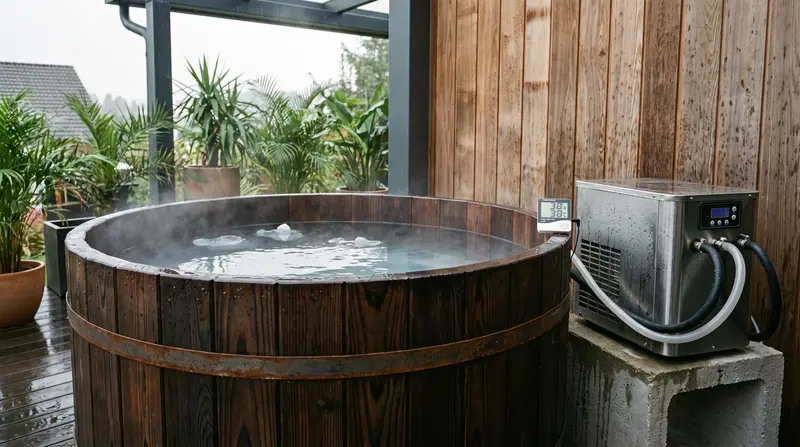
Contrast therapy benefits come from a controlled cold shock: blood vessels constrict, inflammation eases, and the sympathetic nervous system fires up, leaving the body feeling sharp and alert afterward. Submerge in 3-15°C water for a few minutes, then pair it with sauna heat as the contrast — the routine now sought by athletes, gym members and homeowners across Surabaya.
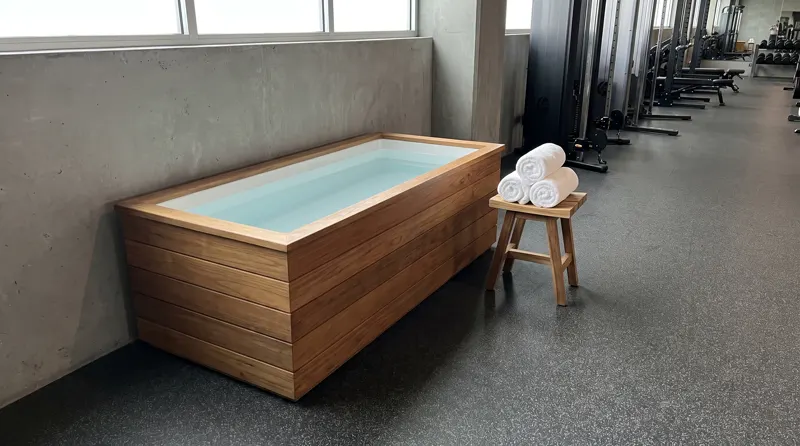
We build chiller-cooled timber cold plunges — larch or thermowood shells with a waterproof liner — for private homes as well as commercial facilities like gyms and padel clubs, so the question we hear most isn’t “does this work,” it’s “why cold, and how cold does it actually need to be.” This article answers both with physiology that holds up, not an overstated promise.
What contrast therapy benefits actually do to the body
When the body is submerged in cold water, blood vessels near the skin and muscles constrict — vasoconstriction — to protect core temperature. Once you get out and start warming back up, those vessels open again and fresh blood rushes into tissue that was just working hard — an effect athletes chase after intense training or a match. The contrast therapy benefits reported most consistently by users:
- Muscle inflammation and soreness ease faster, especially when used within the first hour or two after a hard session.
- The sympathetic nervous system gets a jolt, producing an alert, awake feeling many people compare to a morning coffee — minus the caffeine.
- Sleep quality that night improves for some users who make a cold plunge part of an evening routine.
- Mental resilience gets trained, since the body learns to stay calm through discomfort — a benefit athletes and biohacking enthusiasts mention often.
All of this is ordinary physiology, not a detox claim or a miracle cure. We’re upfront about that boundary because we’re contractors, not medical professionals.
How hot-cold contrast therapy works
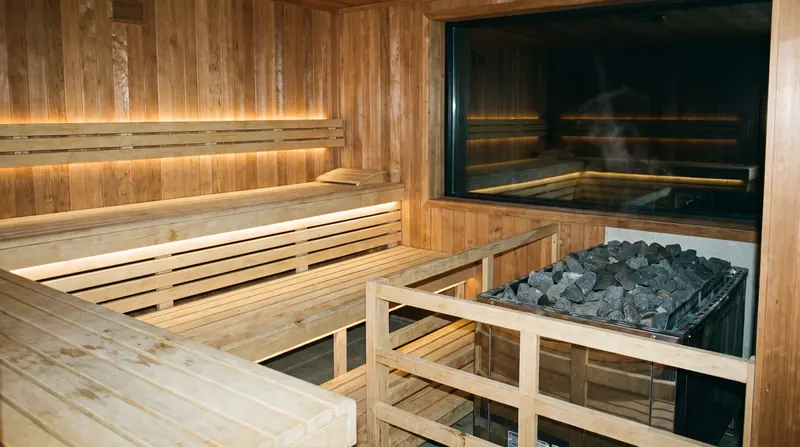
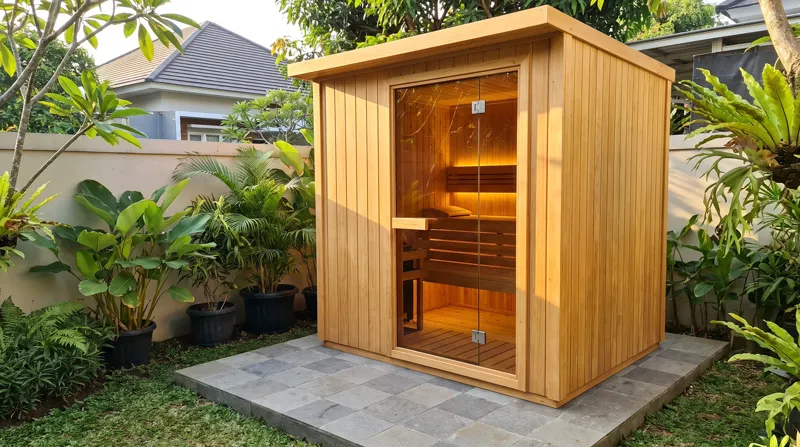
Contrast therapy benefits multiply once cold is paired with sauna heat in a single session — hence the name. The logic is simple: sauna heat (70-90°C) dilates blood vessels and pushes blood toward the skin and muscle; a cold plunge (3-15°C) constricts them again almost immediately. Alternating the two creates a “pumping” effect on circulation that neither temperature produces alone.
A common pattern: 10-15 minutes in the sauna until you’re fully sweating, 1-3 minutes in the cold plunge, a short rest at room temperature, then 2-3 repeats. That sequence is exactly why gyms and padel clubs across Surabaya increasingly install both side by side as one recovery zone — full detail on the heat side of that pairing is on the commercial sauna page.
Ideal cold plunge temperature and how long to stay in
| User level | Temperature | Duration |
|---|---|---|
| Beginner | 15°C | 1-3 minutes |
| Intermediate | 10-14°C | 2-5 minutes |
| Experienced athlete | 3-9°C | 3-8 minutes |
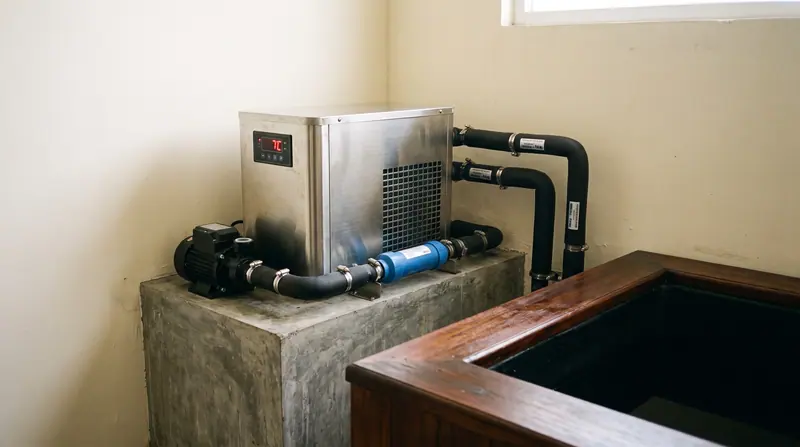
The chiller units we install, rated 1/2-1 HP, hold a steady temperature at whatever number you choose throughout the session — not the slow warm-up you get from a tub filled with bagged ice. For a beginner, starting at a milder temperature and shorter duration matters far more than reaching an extreme number on day one.
Contrast therapy for athletes and sports performance
Contrast therapy benefits show up most for people whose bodies are genuinely under load: padel players who spend hours on a hot court, gym members lifting heavy on a regular schedule, or runners covering long distances in Surabaya’s humid air. Fitness clubs and padel courts around areas like Pakuwon are adding cold plunges to their facilities more and more, not as a gimmick, but because members actually use it after every training session.
For commercial facilities, a cold plunge is usually installed alongside a sauna and sometimes a jacuzzi as one recovery zone — a combination we cover in more depth on the complete wellness zone page and in commercial sauna for gyms Surabaya.
Chiller vs bagged ice: which makes sense long-term
The most practical question from a prospective owner: why buy a chiller when you can just fill the tub with ice every time?
- Temperature consistency. A chiller holds the target temperature through the whole session, every day; bagged ice warms up within minutes and needs constant refilling for repeated use.
- Long-term cost. Ice looks cheap at first, but for a gym or household using it daily, the cost of buying ice every single day adds up faster than most people estimate. A chiller is a one-time investment with a far more predictable electricity cost.
- Water cleanliness. The cold plunges we build come with filtration plus ozone or UV for ongoing water sanitation. A tub topped up manually with ice is much harder to keep clean, especially under shared use at a commercial facility.
- Daily practicality. A chiller means the cold plunge is always ready, with no wait for ice to arrive or melt. For a gym running long hours every day, that’s the difference between a facility members actually use and one that just sits there for photos.
Specification detail and sizing the right chiller capacity for your tub are covered on the chillers & water cooling page. And when a facility wants cold therapy running this month rather than next quarter, an off-the-shelf ice bath with a chiller gets there in days.
Cold plunge at home vs in a commercial facility
Contrast therapy benefits are physiologically identical wherever the tub sits, but the construction needs differ sharply between a private home and a commercial facility. At home, a single tub sized for 1-2 people with a 1/2 HP chiller is usually enough, used a few times a week by the same household. At a gym or padel club, the tub has to withstand back-to-back use by dozens of members a day — meaning a larger chiller capacity, filtration that runs harder, and a stricter water-sanitation schedule to keep quality consistent under constant use.
One difference that’s easy to overlook: a commercial facility needs a written cleaning procedure for staff, not just automated filtration on its own. Water shared across many users needs regular pH and sanitation checks, while a household cold plunge is far lighter to maintain since its use is limited to one family. Full specification for either scenario is on the cold plunge & ice bath page.
Keeping the benefits consistent: upkeep that actually matters
A cold plunge that’s maintained carelessly loses much of its appeal within months — cloudy, odorous water makes people far less willing to get in regularly, let alone stick with a routine. Our maintenance approach runs filtration automatically throughout the day, adds ozone or UV sanitation so the water stays clear without a strong chlorine smell, and checks the chiller unit periodically so the temperature stays precise at your chosen number. Surabaya’s humidity also means algae and bacteria multiply faster in standing water than in a drier climate — the same tropical-conditions logic covered in sauna in tropical climate applies just as much to a cold plunge as it does to a sauna wall. The IDR 300-700 thousand monthly figure mentioned below is mostly the electricity for a chiller running continuously, plus a smaller share for filtration upkeep and periodic sanitation media replacement.
Who should be cautious with a cold plunge
A cold shock stresses the heart and lungs more than most people realise. Check with a doctor first if you have a heart condition, unstable blood pressure, a respiratory condition like uncontrolled asthma, are pregnant, or are recovering from a serious illness. Rules that apply to everyone: don’t try a cold plunge alone unsupervised the first time, don’t hold your breath excessively in cold water, and get out immediately if you feel dizzy or short of breath. Contrast therapy benefits come from controlled exposure, not from pushing past the body’s limits.
Indicative investment for a cold plunge with chiller
| Type | Indicative price |
|---|---|
| Wooden cold plunge with chiller | IDR 45-90 million |
| Chiller only (1/2-1 HP) | IDR 25-55 million |
| Wellness zone (sauna + cold plunge + jacuzzi) | from IDR 250 million |
A cold plunge typically takes 1-2 weeks to install, and monthly running costs sit around IDR 300-700 thousand, covering chiller electricity and water upkeep — all indicative, depending on tub size and usage pattern.
Where we install the most cold plunges in Surabaya
Fitness facilities and padel clubs around Pakuwon are the favourite location, thanks to high member traffic and the need for quick recovery between sessions. Around Dharmahusada, near the campus and hospital corridor, we more often install compact units for private homes and small home gyms.
If you’re considering a cold plunge for your home or business in Surabaya, send a WhatsApp message for a consultation on chiller capacity and pricing. The site survey is free, and we’ll help you settle on the size and temperature range that actually fits what you need.